MINDFUL MONDAY MESSAGE–The Voucher

I had a $10 voucher to spend at Kohl’s.

After shopping, I stood in the checkout line holding three simple items in my hands. In front of me was a woman with a large cart overflowing with clothes and household goods. She turned around, saw me standing there, and immediately offered to let me go ahead of her.

I smiled and declined. She insisted.

There were two cashiers open. One was moving smoothly. The other was struggling to process an unusual coupon code and had to call for a manager. It was taking a while.

Just then, the first cashier became available and waved me over.

As she rang me up, I glanced to my right. The second cashier had barely made progress. The woman who had let me skip ahead was still waiting. And, now, because I had gone in front of her, she would likely be waiting even longer.

And I felt it, that quiet moment of awareness.

A week earlier, my 12-year-old cousin had found a $10 bill at a holiday market. She chose not to keep it, saying simply, “It’s not mine.” That clarity stayed with me.

So I asked the cashier if I could leave my $10 voucher for the woman behind me. I explained why. I was thinking, too, of Maimonides, who teaches that one of the highest forms of giving is when it can be done anonymously—without fanfare, without recognition.

The cashier smiled and said, “That’s so thoughtful.”

I scribbled a small note:

“Thank you for letting me skip ahead of you. Have a wonderful day!”

And without saying anything to the woman, I took my bag and walked out.

As I exited the store, I faintly heard her say to the cashier, “That was so sweet.”

It struck me: kindness often creates a ripple we never see.

Her small act made space for me.

My small act brought joy to her.

Ten dollars. A place in line. A note on receipt paper. And, yet, I believe that something genuine and powerful passed between us.

And my hope and blessing for all of us this week is to be mindful of when someone makes our day just a little easier.

Instead of simply receiving it:

Pause.

Notice.

Pass it forward-quietly, without needing credit.

May we move through the world alert to small openings for goodness and brave enough to step into them.

MINDFUL MESSAGE: Tu Bishvat Reflection Questions

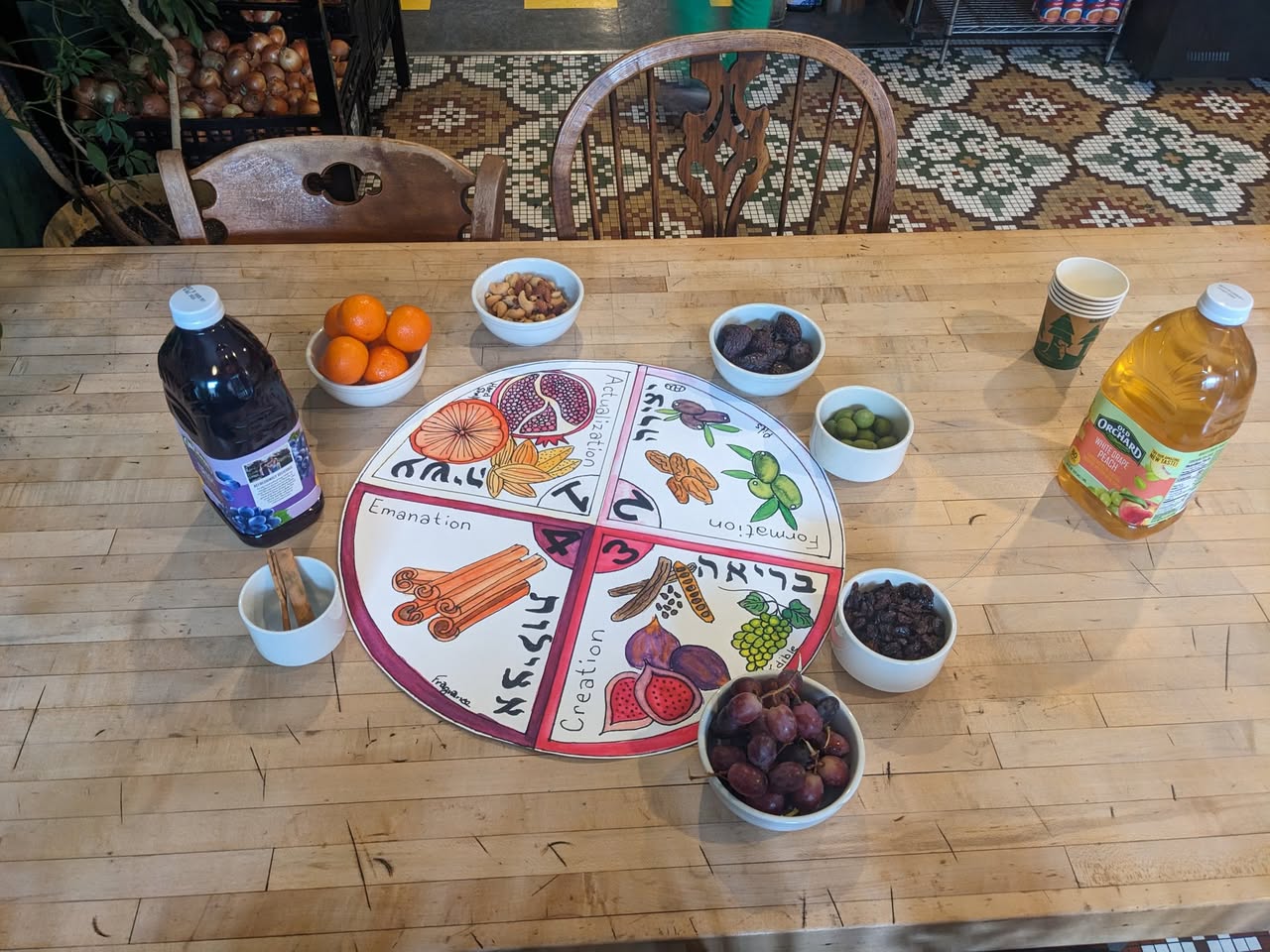
Today is Tu Bishvat, the Jewish holiday that centers a spiritual connection with the land and reminds us of our obligation and oportunity to care for it. As part of the Seder I led this morning for Own Your Judaism and Tikkun Ha-Ir, I offered the following reflection questions for each of the four cups of grape juice and then a fifth question specifically for trees.

1st Cup: We often associate winter with barrenness. What blessings do you find in winter, in emptiness?

2nd Cup: As we connect last year with this year through the rebirth of spring, what do you want to carry forward with you from last year, and how can that form into a mindful practice?

3rd Cup: Growth is a gradual process. What is something that you have taken for granted in your growth, and how can you practice gratitude around it?

4th Cup: This is a cup symbolizing hope. What can you do to make the earth and the world–the litter ground–better and closer to our ideal?

Bonus Reflection on Trees: How do trees inspire you?

May this Tu Bishvat allow us to appreciate the gifts of the land and rededicate ourselves to its care and sustenance.

MINDFUL MESSAGE: Small Acts, Still Sacred

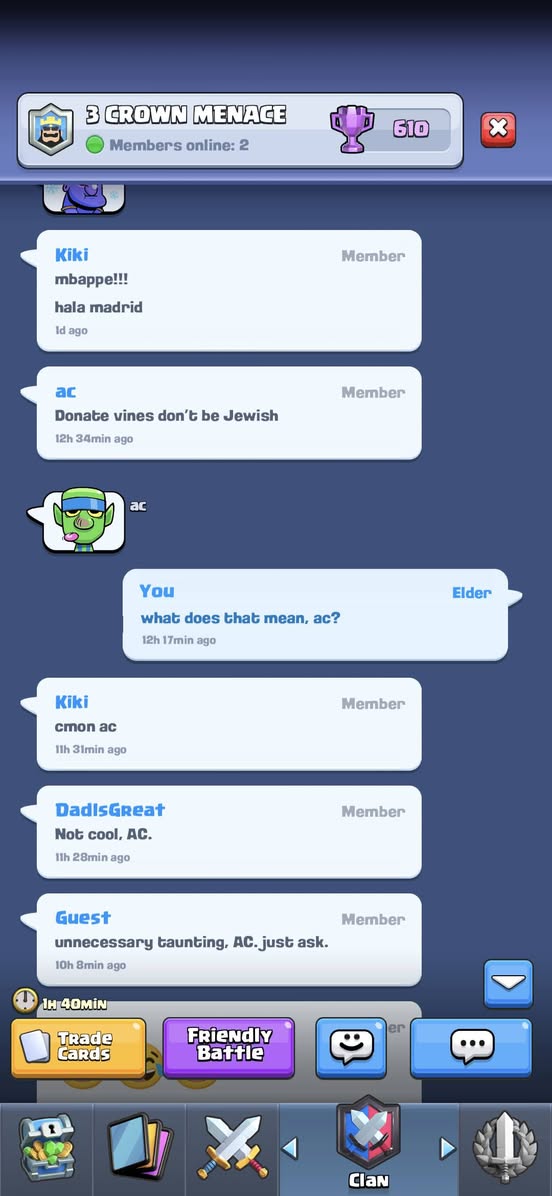
I play Clash Royale, a game on my phone, and I’m part of a clan where people can request card donations to make their deck stronger. Recently, someone asked for Vines and added the message:

“Donate vines, don’t be Jewish.”

I was the first to see it and simply asked, “What does that mean?”

Within moments, others chimed in—not with jokes or pile-ons, but with boundaries:

“C’mon, man.”

“Not cool.”

“Unnecessary taunting.”

“You can be funny without saying that.”

We’re living in turbulent times, from mass violence in Australia to horrifying murders in Minneapolis. It can feel like the world has lost its moral compass. And yet, it’s moments like these that reinforce for me that most people are, at their core, decent.

In an anonymous online game, among strangers of every background, someone said something derogatory, and others spoke up. Quietly. Immediately. Without being asked.

Small acts of allyship.

Small acts of resistance.

All anonymous.

All sincere.

Mindful action doesn’t always look like silence or stillness. Sometimes it’s saying, “Hey, that’s not okay,” and then moving on with kindness and integrity intact.

May small acts of courage continue to ripple far beyond where they begin.

MINDFUL MESSAGE: Faith & Wealth

On Tuesday, January 20, 2026, I had the joy and honor of sharing Judaism’s perspectives on Faith & Wealth during a Zoom Webinar hosted by the Interfaith Conference of Greater Milwaukee. Here is what I shared (and, If you would prefer to listen to what I shared, please follow this link to the 7 minute and 45 second audio file):

“Thank you, Ahmed. Thank you also to everyone for the opportunity and the honor to be here and to share a little bit about the Jewish teachings and perspectives about wealth. My name is Moishe Steigmann, The Mindful Rabbi, and once again, it’s really an honor to be here.

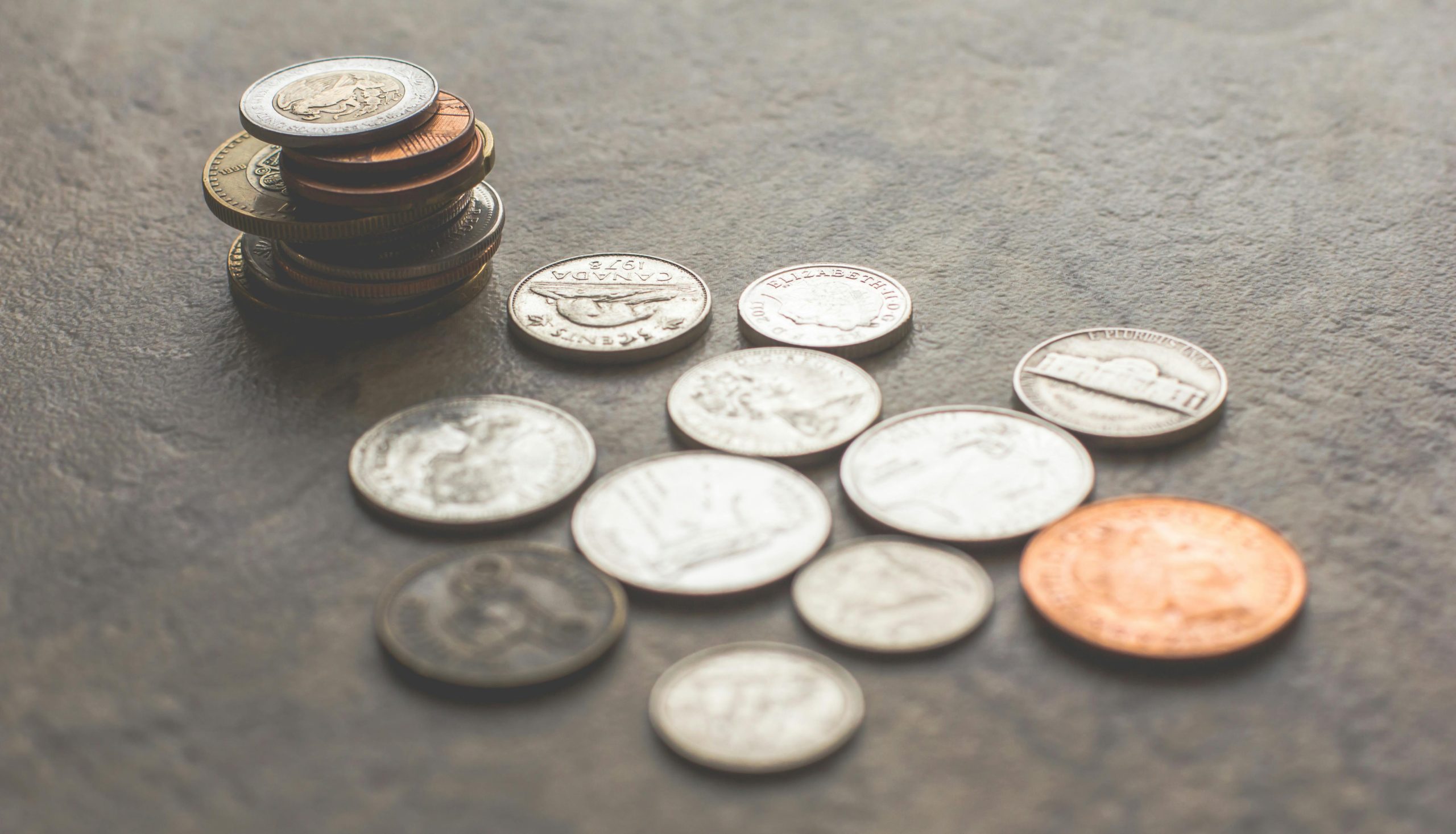
In Judaism, wealth is not simply an economic category. It’s not simply about how much money I have, how much money I can get. Wealth is also a spiritual category. Judaism does not ask whether wealth is good or bad. Rather, Judaism asks, “What does wealth do to us? And in turn, what does wealth ask us to do for others?” So, wealth really is not neutral. It’s not even self-justifying. Rather, wealth is a test of values and a test of awareness. 

Truthfully, wealth itself is not considered a problem within Judaism. The Torah, in fact, recognizes material prosperity as a blessing. Every single day, we, as Jews, recite the amidah, which is the central prayer and Judaism, and one of those prayers asks for prosperity. We bless each other, we bless ourselves with abundance and with wealth. 

At the same time, Judaism does warn about what abundance can do to us as individuals and, in turn, the harmful effects that can have for society. First of all, we can forget vulnerability. We can get comfortable with the wealth that we have, the lives that we live, and forget those in our society who are in need of help. We can forget interdependence, that wealth is not achieved alone. We live in an interdependent world, and anything that I have gained is really also on the footsteps of so, so, so many others, both visible and often unseen. And we can forget God, community, and responsibility. Throughout the Torah, we are taught of our responsibility to give to others, to leave what we have for others. 

Instead, we grow attached to our wealth. Like in Islam, as Ahmed is suggesting, ownership in Judaism is conditional. Things do not belong to us and to us alone. Rather, we are taught that everything in the earth is the Lord’s. We are not absolute owners of anything. Rather, we are stewards. And yes, possession might be real in a tangible sense, and it is never ultimate. Judaism insists that even what I earn is not mine alone because no one earns in isolation. For instance, every single time after we eat food, in our grace after meals, we bless God, and we bless the land. I don’t have food just because I have money. I have food because of God and because of the land. We recognize that labor depends on society; markets depend on trust; success depends on randomness as much as effort. 

Wealth is something that we hold. It’s not something that we are. It’s not, “I am wealthy.” Rather, it’s, “I have wealth.” It’s not, “what did I do to deserve my wealth?” It’s, “what do I do with the wealth with which I am blessed?” 

The most common name to Jewish giving is tzedakah, and many of you may have heard that before. We often simplify and often mistranslate tzedakah as charity. Tzedakah is not the impulse to want to do something kind for someone else and to give them money. Rather, tzedakah comes from the Hebrew root word of tzedek, which is justice. Tzedakah is a societal, collective, and individual obligation.

Maimonides–Rambam–a 12th century Jewish theologian and scholar, talks beautifully about the hierarchy of tzedakah, and that tzedaha, the point is really to center dignity. Because one of the highest levels of tzedakah is giving and receiving anonymously, so no one is embarrassed in front of their fellow. And the highest level of tzedakah is helping someone find a job. Maimonides also reinforces the Jewish notion of tithing, giving 10 percent of one’s income. And fascinatingly. he also says that a Jew should not give more than 20 percent of their income. His justification is, lest they become impoverished themselves. Which, 800 years ago, makes sense. Maybe I give so much that I, in turn, become one who is needy. I can’t imagine, however, that maimonides could imagine, can understand the incomprehensible individual wealth that exists today. And so I think Judaism rather is focused on the core principles of sustainability and responsibility.

The question that Judaism forces us to ask today is whether ethical responsibility has scaled along with capacity. Judaism invites us to hold wealth with awareness rather than with anxiety, with gratitude rather than guilt, and with responsibility rather than entitlement. 

Indeed, I suspect–and I am so excited to hear whether my suspicion is accurate or misses the mark–I suspect that every faith represented here asks some version of the same question: “How do we live ethically and remain fully human in the presence of abundance?” And I wonder out of curiosity and mindful reflection, “What would change if we measured success not by what we accumulate rather by how awake we remain in the presence of abundance?”

And so it is my hope and blessing for each one of us that we are indeed prosperous. And that, in turn, we use our prosperity to embody the ideals, values, teachings, and traditions of each of our faith practices to our individual and collective responsibility to truly make the world a better and more just place.

Thank you.”

MINDFUL MESSAGE: Reflected Light on MLK Day

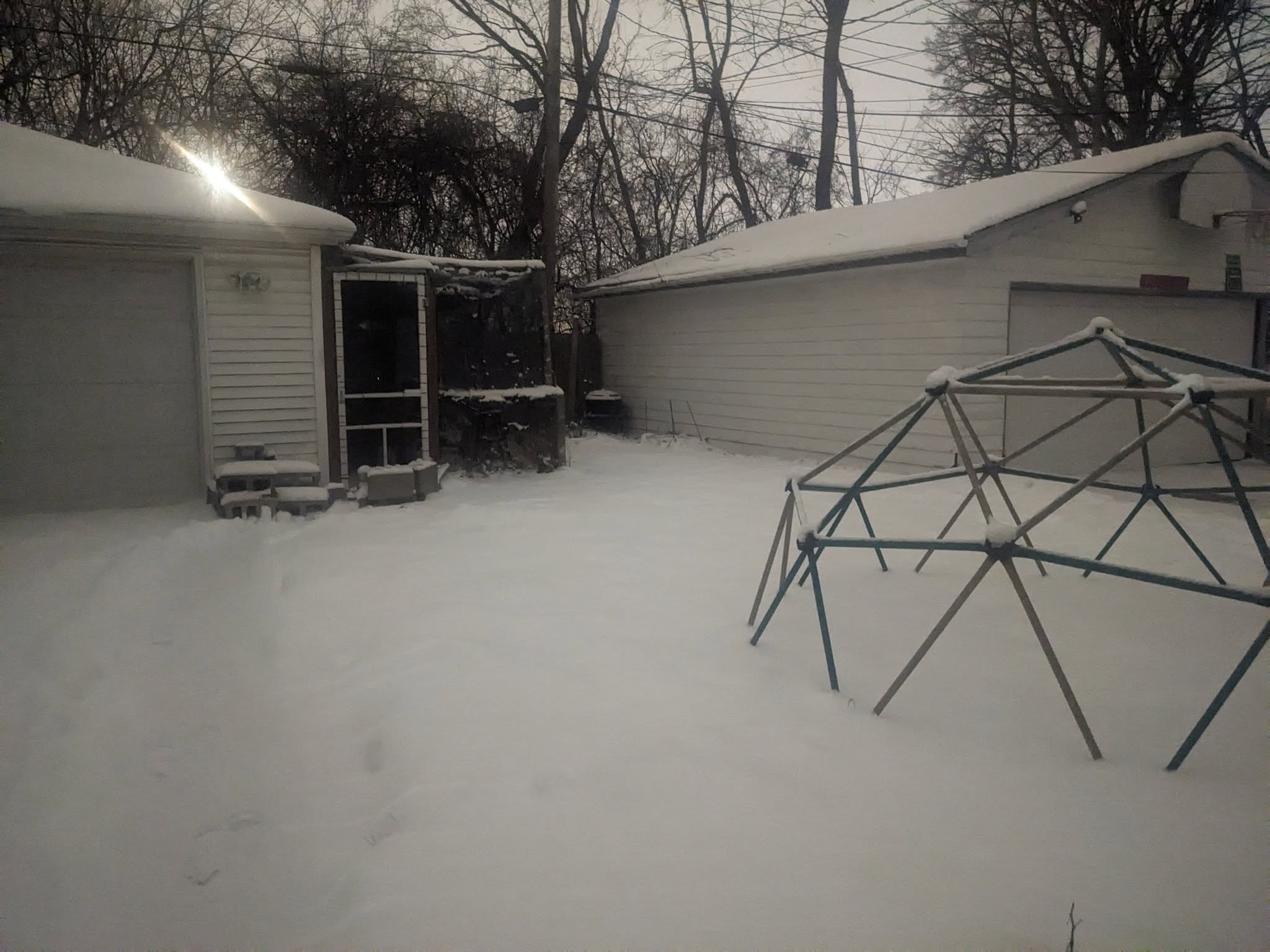
Late last night, I took a picture of my snow-covered backyard. Though it was the middle of the night, it looked almost like daytime—the moon reflecting light off the snow.

On this MLK Day, I’m struck by the reminder that light doesn’t always come from a single blazing source. Sometimes it comes from reflection—when we take the light we’ve received and help amplify it for others.
Dr. King reminded us that darkness cannot drive out darkness; only light can do that. And sometimes that light is quiet, steady, and shared.

MINDFUL MESSAGE: Two Decades Later

Twenty years ago, during my final year of rabbinical school, I delivered this sermon to the community. Each graduating rabbi was invited to offer reflections, and I remember how nervous I felt standing at the pulpit, sharing words that were still very much in formation.

Two decades later, I read them with a different kind of awareness. While my labels have shifted—I no longer think of myself as a “Conservative rabbi,” just a rabbi—the questions I wrestled with then about God, relationship, belonging, and Judaism still accompany me. What has changed is not the presence of doubt, but my capacity to sit with it more gently, more honestly, and with greater compassion for myself and others.

I share these words now as a mindful reflection on growth over time—how we evolve without outgrowing our questions, and how the seeds planted years ago continue to teach us who we are becoming.

As you read, consider: What beliefs, questions, or uncertainties from an earlier chapter of your life are still with you today? In what ways have you grown—not necessarily by resolving them, but by learning to live with them more wisely?

Shabbat shalom.

“It’s Only $10… And It’s Not Mine.”

Over the weekend, my cousin, her middle-school daughter, my girlfriend, and I wandered through a holiday art fair—one of those cozy, colorful spaces where creativity fills the air. As we browsed a booth, I suddenly bent down and picked something up: a crisp ten-dollar bill lying on the ground.

We looked around. We were the only ones in the stall. The artist running the booth didn’t know whose it was. And so began an unexpectedly rich conversation between my younger cousin and me: what to do with the found money.

We ran through the options.
Should we ask for an announcement to be made? But then how would we know if the person who came forward was actually the owner?
Should we give it to the artist? But it’s not hers. What if someone comes looking for it later?
Should we just keep it? After all, we found it. Isn’t that fair?

But then came the deeper questions:
What if that $10 was meant to buy someone’s only holiday gift?
What if this little bill mattered far more to someone else than to us?

And then my middle-school cousin said something that essentially ended the discussion:
“It would be stealing if we kept it. It’s not ours.”

When I offered for her to decide what to do with the money, she opted to hand it to the artist to hold in case someone returned looking for it. And if no one did, she said, the artist could keep it.

I told her how thoughtful, kind, and generous that was.
She shrugged and replied, “It’s only $10… and it’s not mine.”

There was no self-congratulation. No moral grandstanding. Just clarity. Integrity. A simple truth said with the ease of someone who intuitively understands what is right.

Mindful Monday: A Torah Repaired, A World in Need of Healing

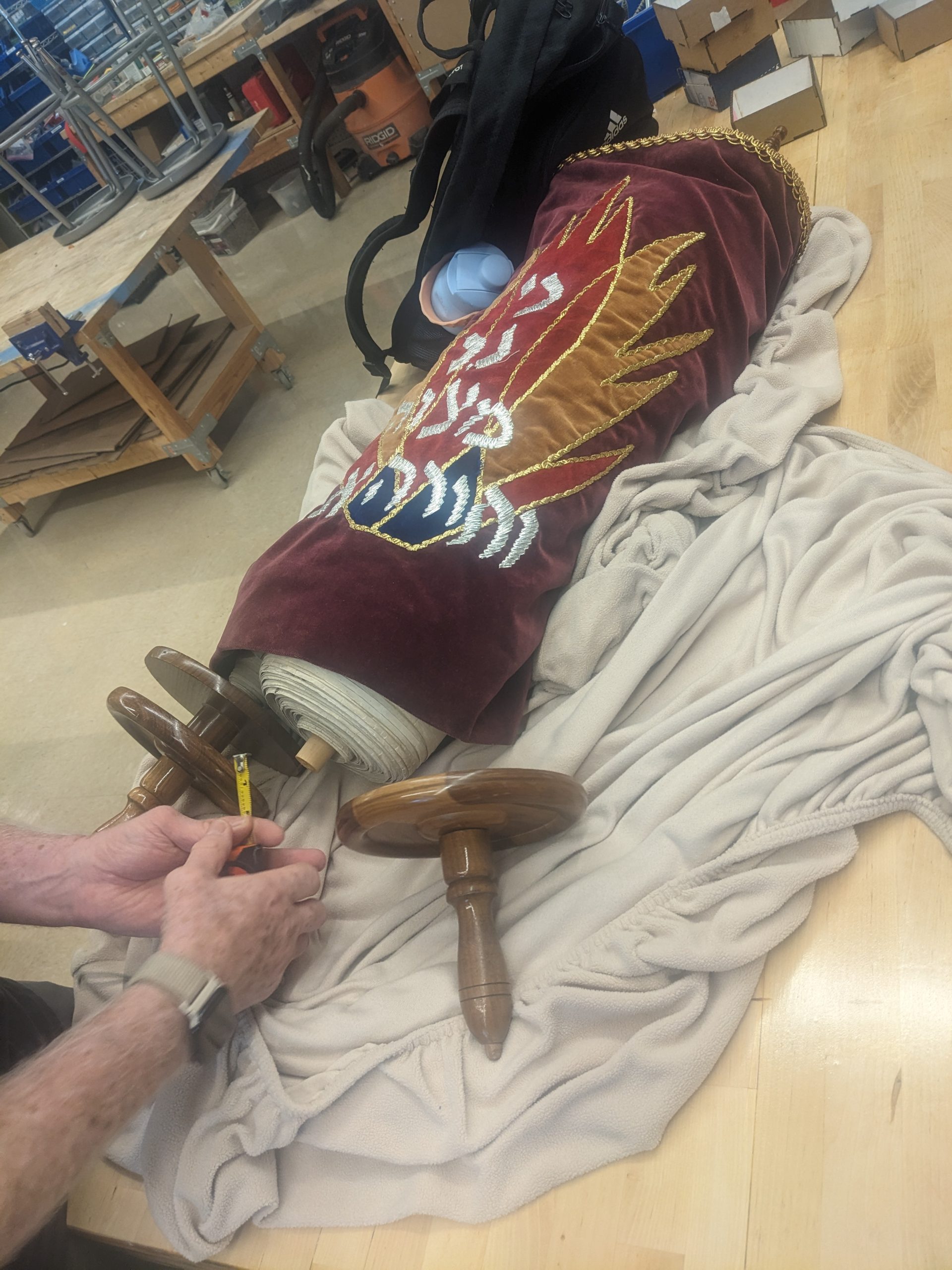
Recently, one of its atzei ḥayyim—the wooden handles that hold and support the scroll—broke. Not only did this make hagbah (lifting the Torah) impossible, but it also created a moment of reflection: even sacred things need repair.

Enter Jim Salinsky, Woodworking Instructor at Milwaukee Jewish Day School, who lovingly restored the handle. His care and craftsmanship quite literally helped us hold our Torah once again.

As we approach Simchat Torah, when we celebrate both the ending and beginning of the Torah, I can’t help but see a parallel in the world around us.

In the Middle East, as hostages and Palestinians (among others) return home, we are witnessing the fragile beginnings of repair. There is nothing more sacred than human life—and perhaps nothing holier than the act of restoring what has been broken.

Our Torah, newly mended, is a quiet reminder that repair is possible. It takes patience. It takes care. And it takes a belief that even after deep fracture, we can still hold on—to hope, to each other, and to the possibility of peace.

May this Simchat Torah be a holiday in which we dance with gratitude for what’s whole and strengthen our courage for what still needs healing.

The Prospects of Peace: A Pre-Yom Kippur Message

This evening brought news of possibility: perhaps not just a ceasefire, but permanent peace, a path to Palestinian self-determination, and a new horizon of security for Israel. Nothing is certain, and we know how quickly hope can be dashed. In the next weeks, days, or even hours, we may well face setbacks that suspend our long-awaited hopes once again. Yet it is never too late to hope.

So how are we to respond to today’s announcement that Prime Minister Netanyahu has accepted President Trump’s proposal for an end to the war and for sustained peace, a proposal already supported by several Arab nations?

It is human nature to want to be proven correct. But this is not the time for victory laps or I-told-you-sos. We still lack full understanding of what has unfolded since October 7th and in the years and decades before. Healing will take time. There is still too much pain, too much loss, too much accounting to be done.

And yet, perhaps it is no coincidence that news of peace emerges as we approach Yom Kippur. This holy day guides us in two essential ways.

First, through reflection. How am I feeling at this moment? How do I give voice to all that swirls within me? How have I changed over the past two years? There are so many powerful and conflicting emotions. We start with a vidui, a confessional. We give voice to it all.

Second, through teshuvah—repentance and return. Over these months, in pain or in anger, each of us has undoubtedly said or done things we regret. We may have spoken harshly, judged too quickly, or harmed others with our words and actions. Teshuvah calls us to begin the work of repair: a visit, a phone call, a note, a moment of truth-telling and apology. We can hold compassion for our own hurt while still holding ourselves accountable.

As we hope and pray for genuine, lasting, and dignified peace in the Middle East, may we also seek peace within our souls and in our relationships. May this season of reckoning inspire us to repair what we can, release what we must, and return—again and again—to the possibility of peace.

Mindful Monday Message: Beyond Seeing

Last night, I was up in Sturgeon Bay in Door County officiating at a wedding, with dinner and dancing overlooking the Bay. During the nighttime, we were told we could see the Northern Lights. I walked down to the shore, gazing out across the horizon, but felt disappointed—I could barely see anything. Just as I was turning away, my cousin Max showed us a luminous, breathtaking picture he had taken.

“How did you do that?” I asked.

He explained that the camera can capture light that our eyes alone cannot perceive. I tried it, and sure enough, my phone revealed colors shimmering in the night sky that I had not been able to witness with my own eyes.

As we approach the High Holidays, I’m reminded that so much of life is like this. Sometimes we can’t see the beauty, hope, or possibility that is right in front of us—until we pause, adjust our perspective, or allow someone else to help us notice. Teshuvah invites us to open ourselves to that deeper seeing: to catch glimpses of the light within us and in those around us.

This season, may we train our hearts like a camera lens–able to reveal hidden brilliance, to notice goodness where we once saw only shadow, and to be surprised by joy.